
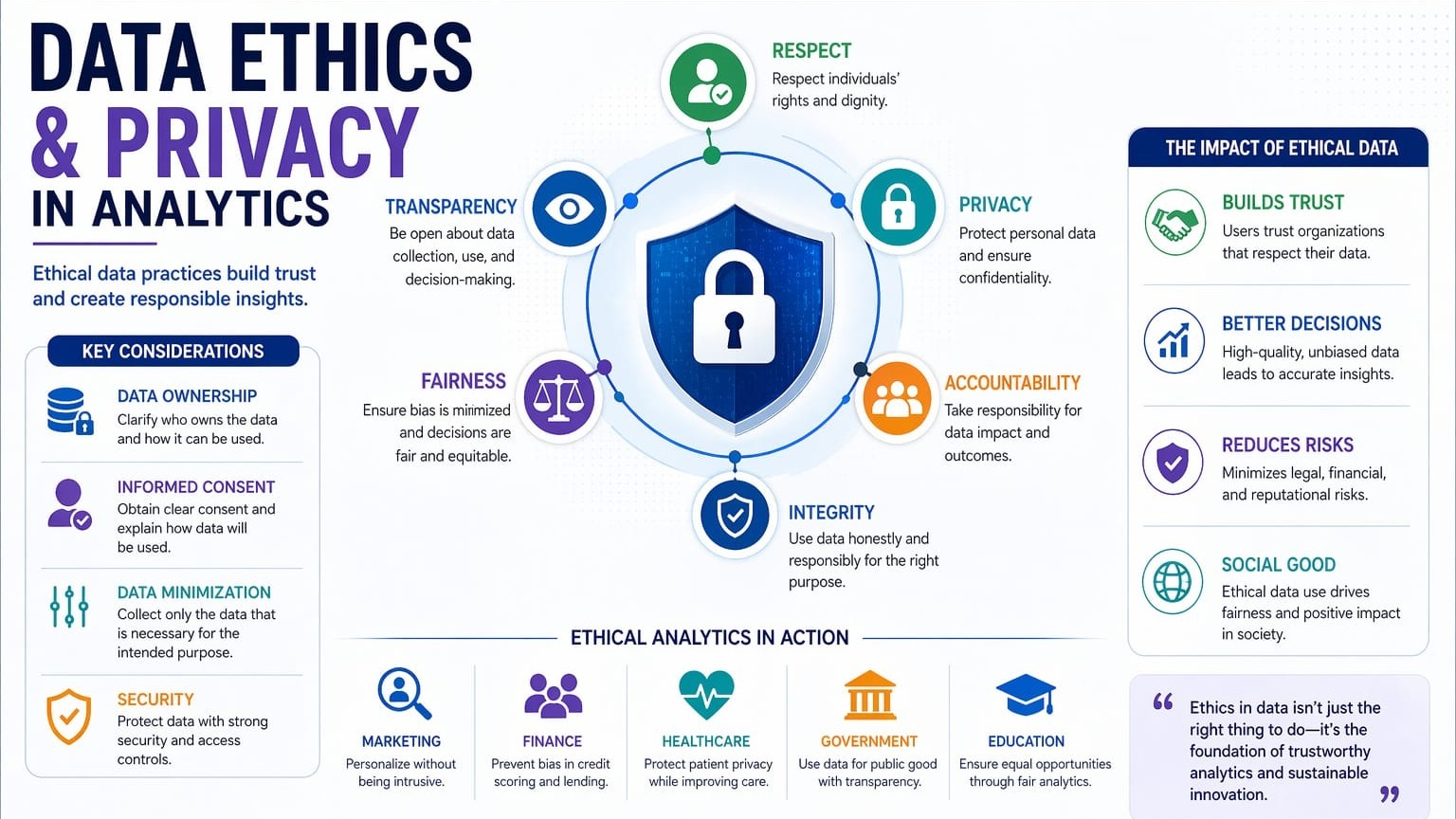
Data Ethics and Privacy in Analytics: Why Responsible Data Use Matters
Introduction
In the modern digital economy, data has become one of the most valuable assets. Organizations rely on analytics to drive decisions, improve customer experiences, and gain competitive advantage. However, the rapid growth of data collection has raised serious concerns around ethics and privacy. Responsible data usage is essential to ensure trust, compliance, and long-term sustainability.
Understanding Data Ethics
Data ethics refers to moral principles that guide how data is collected, processed, and used. It ensures that organizations respect user rights and avoid harm.
- Fairness in decision-making
- Transparency in data usage
- Accountability for outcomes
- Respect for user consent
Understanding Data Privacy
Data privacy focuses on protecting personal and sensitive information from misuse or unauthorized access.
- Personal data protection
- User consent and control
- Secure storage and processing
- Compliance with regulations
Why Ethics and Privacy Matter
- Builds trust with users
- Prevents misuse and exploitation
- Ensures legal compliance
- Protects brand reputation
- Enhances long-term business sustainability
Key Challenges in Data Ethics
- Data bias leading to unfair decisions
- Lack of transparency in algorithms
- Over-collection of unnecessary data
- Weak data security systems
- Difficulty in maintaining compliance
Impact on Businesses
Ignoring ethics and privacy can lead to severe consequences including legal penalties, loss of customer trust, and financial damage. Organizations must prioritize responsible data practices to avoid risks.
Best Practices for Ethical Data Use
- Collect only relevant data
- Ensure informed user consent
- Implement strong security measures
- Maintain transparency in analytics
- Regularly audit data processes
- Train teams on ethical standards
Role of Data Analysts
Data analysts play a key role in ensuring ethical practices. They must validate data accuracy, avoid bias, and communicate insights responsibly while protecting user privacy.
Future of Data Ethics
As AI and automation grow, ethical concerns will increase. Organizations will need stricter policies, better governance, and more transparency to maintain trust.
Conclusion
Data ethics and privacy are critical pillars of modern analytics. Responsible data practices not only protect users but also strengthen business credibility and long-term success.
TL;DR
- Ethical data use builds trust
- Privacy protects user information
- Ignoring ethics leads to risks
- Follow best practices and regulations
- Responsible data = sustainable growth