
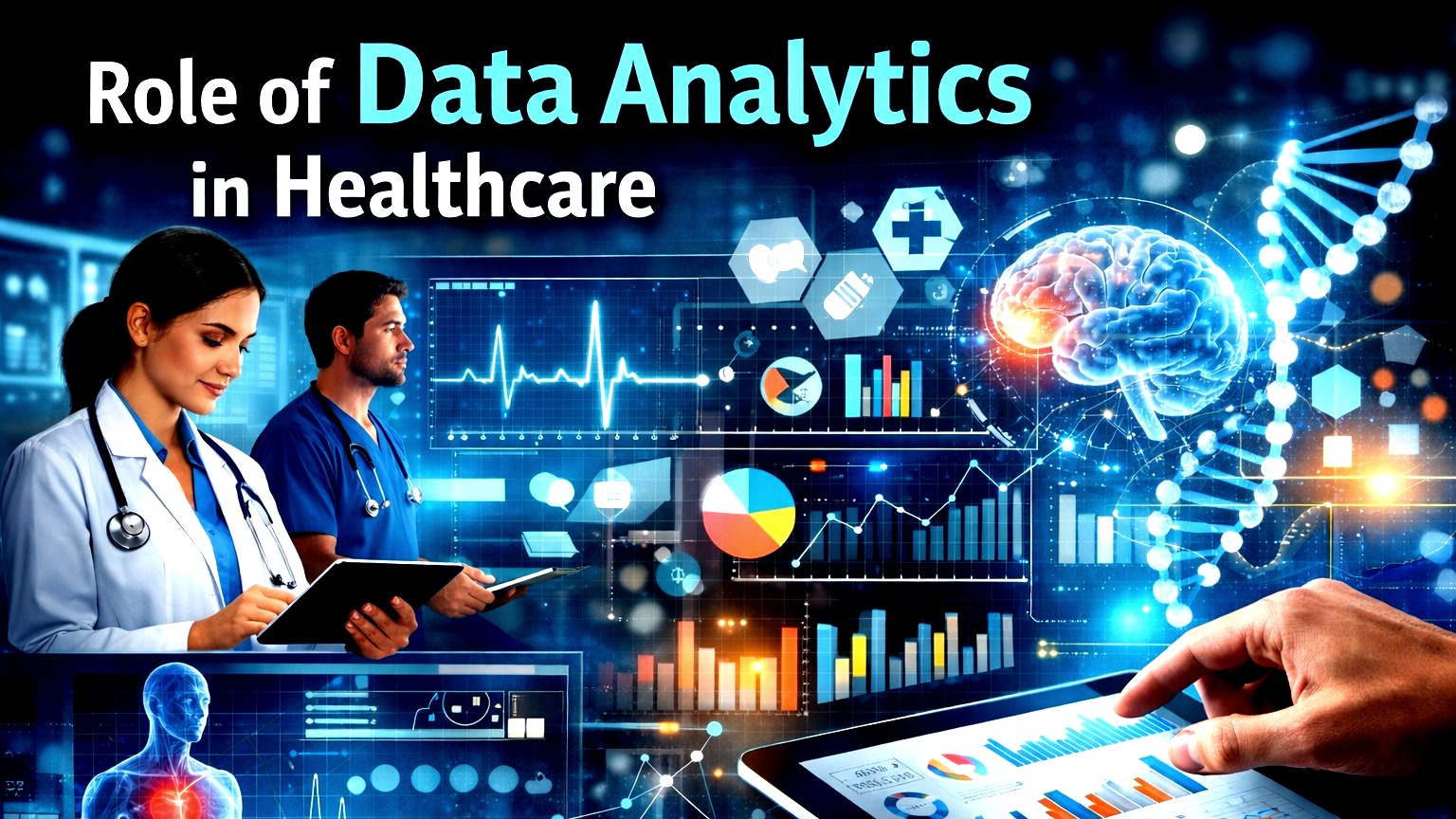
The Role of Data Analytics in Healthcare:
Introduction
Healthcare is one of the most critical sectors in the world, and with the rise of digital technologies, data analytics has become a game-changer. From improving patient care to predicting diseases and optimizing hospital operations, data analytics is revolutionizing how healthcare systems function.
In today’s data-driven world, hospitals, doctors, and researchers rely heavily on data to make smarter, faster, and more accurate decisions.
What is Data Analytics in Healthcare?
Data analytics in healthcare refers to the process of collecting, processing, and analyzing medical data to gain insights that improve patient outcomes and operational efficiency.
This data can include:
• Patient records
• Medical history
• Lab reports
• Insurance data
• Wearable device data (like fitness trackers)
Key Roles of Data Analytics in Healthcare
1. Improving Patient Care
Data analytics helps doctors make accurate diagnoses and personalized treatment plans. By analyzing patient history and symptoms, healthcare providers can deliver better care.
Example: Predicting the risk of heart disease based on lifestyle and medical history.
2. Early Disease Detection
With predictive analytics, diseases can be detected at an early stage, even before symptoms appear.
Example: AI models can predict diabetes or cancer risks using historical data.
3. Hospital Management & Efficiency
Hospitals use analytics to:
• Manage patient flow
• Reduce waiting time
• Optimize staff scheduling
• Improve resource allocation
Result: Faster services and better patient satisfaction.
4. Personalized Medicine
Data analytics enables customized treatment based on individual patient data, genetics, and lifestyle.
Example: Tailored cancer treatments based on genetic analysis.
5. Cost Reduction
Healthcare costs can be reduced by:
• Avoiding unnecessary tests
• Reducing hospital readmissions
• Improving operational efficiency
This makes healthcare more affordable.
6. Disease Outbreak Prediction
Analytics helps in tracking and predicting disease outbreaks and pandemics.
Example: COVID-19 spread analysis using real-time data.
7. Drug Discovery & Research
Pharmaceutical companies use analytics to:
• Speed up drug development
• Analyze clinical trials
• Identify effective treatments
This reduces time and cost in research.
Tools & Technologies Used
Some popular tools in healthcare analytics include:
• Python (Pandas, NumPy, Scikit-learn)
• SQL for database management
• Power BI / Tableau for visualization
• Machine Learning & AI models
• Big Data tools (Hadoop, Spark)
Challenges in Healthcare Analytics
Despite its benefits, there are some challenges:
• Data privacy & security concerns
• Data quality issues
• High implementation cost
• Lack of skilled professionals
Future of Data Analytics in Healthcare
The future is highly promising with:
• AI-powered diagnostics
• Real-time patient monitoring
• Smart hospitals
• Integration with wearable devices
• Advanced predictive healthcare systems
Data analytics will continue to make healthcare more proactive than reactive.
Conclusion
Data analytics is transforming healthcare by improving patient care, reducing costs, and enabling early disease detection. As technology advances, its role will only grow stronger, making healthcare more efficient, accurate, and accessible.
For students and professionals, especially in data science, healthcare analytics offers huge career opportunities and the chance to make a real impact on people’s lives.