
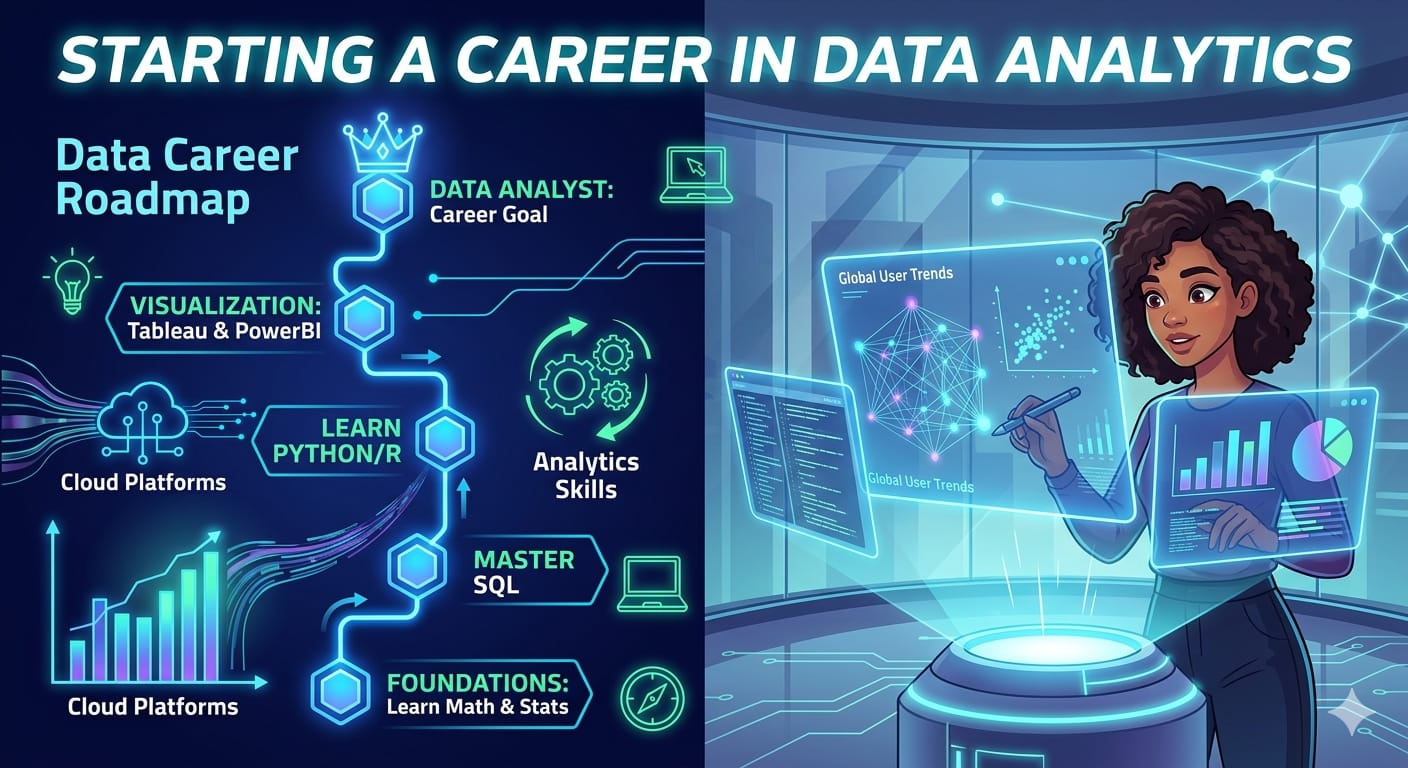
How to Start a Career in Data Analytics
In today’s digital world, data is everywhere. From the apps we use daily to the websites we visit, everything generates data. Companies use this data to make smart decisions, understand customers, and grow their business. This is where data analysts come in. If you are someone who enjoys working with numbers, solving problems, and finding patterns, then a career in data analytics might be perfect for you.
But the big question is — how do you actually start?
Don’t worry. In this blog, we will walk through the entire journey step by step in a simple and practical way.
1. Understand What a Data Analyst Does
Before jumping into learning tools and skills, it is important to understand the role of a data analyst.
A data analyst collects, cleans, and studies data to find useful insights. These insights help businesses make better decisions. For example, a company might want to know why their sales are dropping. A data analyst will analyze the data and provide answers.
In simple words, a data analyst turns raw data into meaningful information.
2. Build a Strong Foundation in Basics
You don’t need to be a math genius, but having a basic understanding of certain concepts is important.
Start with:
- Basic statistics (mean, median, mode, standard deviation)
- Probability basics
- Logical thinking and problem-solving
These concepts help you understand data better and make accurate conclusions.
3. Learn Important Tools and Skills
Now comes the practical part. To become a data analyst, you need to learn some tools that are commonly used in the industry.
a) Excel
Excel is often the first step in data analytics. Learn how to:
- Use formulas (SUM, AVERAGE, IF)
- Create pivot tables
- Clean and organize data
b) SQL
SQL is used to work with databases. It helps you extract data easily.
You should learn:
- SELECT statements
- WHERE conditions
- GROUP BY and ORDER BY
- Joins
c) Python or R
Python is widely used because it is easy to learn and very powerful.
Important libraries:
- Pandas (for data manipulation)
- NumPy (for calculations)
- Matplotlib or Seaborn (for visualization)
d) Data Visualization Tools
Visualization helps present data in a clear way.
Popular tools:
- Power BI
- Tableau
These tools help you create dashboards and reports.
4. Practice with Real Data
Learning theory is not enough. You need to practice.
Start with small projects like:
- Analyzing sales data
- Studying COVID-19 trends
- Exploring Netflix or Spotify datasets
Websites like Kaggle provide free datasets for practice.
Try to solve real problems and ask questions like:
- What trends do I see?
- What insights can I find?
- How can this help a business?
5. Build a Portfolio
A portfolio is very important when applying for jobs. It shows what you can actually do.
Include:
- 3–5 projects
- Clear explanations of your work
- Visualizations and dashboards
You can create your portfolio using:
- GitHub
- Personal website (optional)
Make sure your projects are simple but meaningful.
6. Improve Your Communication Skills
Being a data analyst is not just about numbers. You also need to explain your findings clearly.
For example, if you find that sales dropped by 20%, you should also explain why and what can be done.
Good communication makes you stand out from others.
7. Learn from Online Resources
There are many free and paid resources available online.
Some popular platforms:
- YouTube (free tutorials)
- Coursera
- Udemy
- Google Data Analytics Certificate
Choose one or two platforms and stay consistent.
8. Apply for Internships and Entry-Level Jobs
Once you have basic skills and projects, start applying.
Look for roles like:
- Data Analyst Intern
- Junior Data Analyst
- Business Analyst (entry-level)
Don’t wait until you feel 100% ready. Apply while learning.
Also, prepare for interviews:
- Practice SQL questions
- Revise basic statistics
- Be ready to explain your projects
9. Stay Consistent and Keep Learning
Data analytics is a growing field. New tools and techniques keep coming.
To stay ahead:
- Keep practicing
- Work on new projects
- Follow industry trends
Consistency is more important than perfection.
10. Common Mistakes to Avoid
While starting, many beginners make some common mistakes.
Avoid these:
- Learning too many tools at once
- Ignoring basics
- Not practicing enough
- Copying projects without understanding
Focus on learning deeply rather than quickly.
Final Thoughts
Starting a career in data analytics may seem confusing at first, but if you follow the right path, it becomes much easier.
Remember:
- Start with basics
- Learn key tools
- Practice regularly
- Build projects
- Apply for opportunities
You don’t need a perfect background to begin. What matters is your interest, effort, and consistency.
Take one step at a time, and slowly you will see progress.
Data analytics is not just a career — it is a skill that helps you understand the world better.
So, if you are thinking about starting, this is the best time to begin.
Good luck on your journey!